

Skijoring
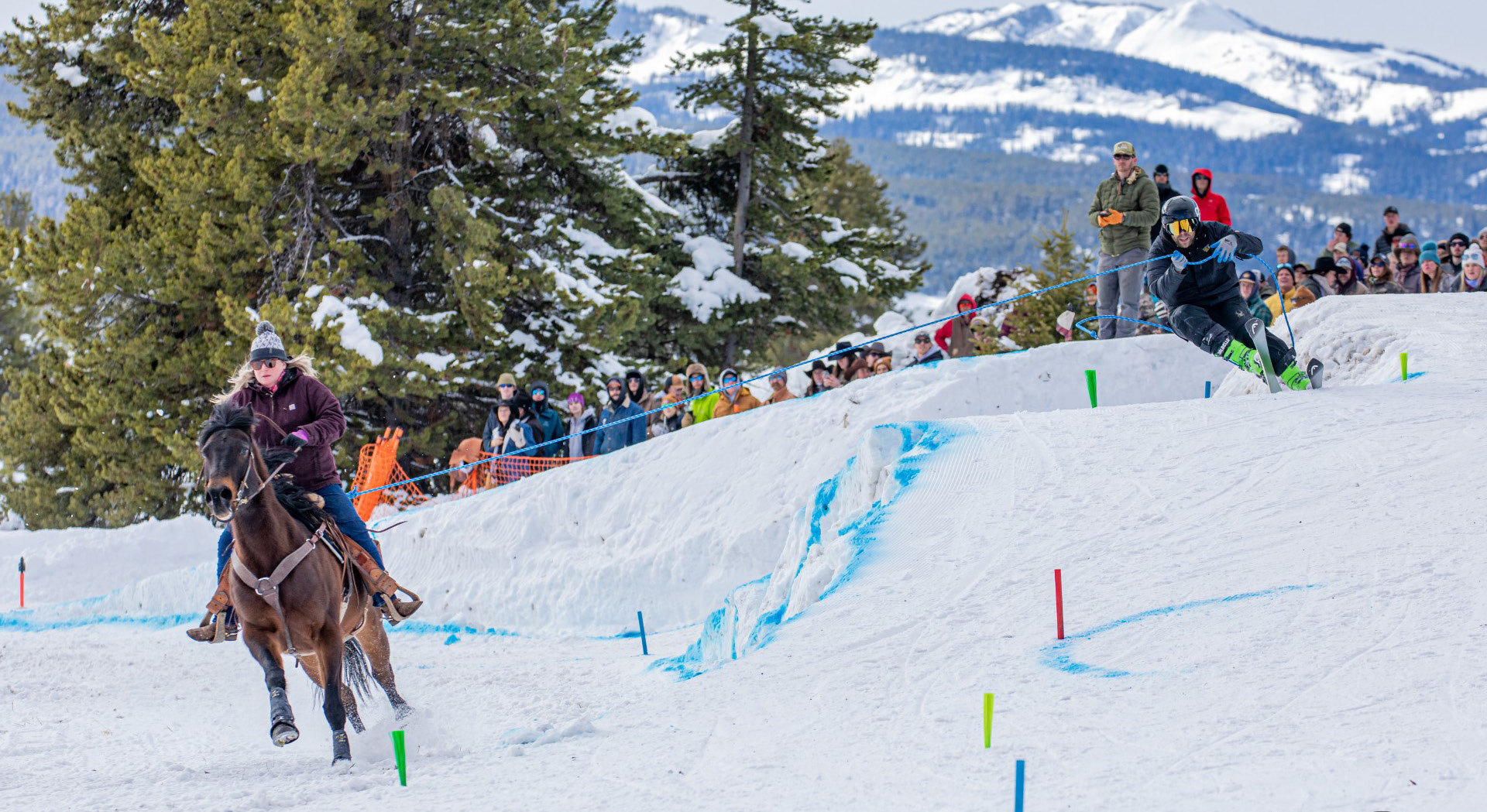
Photo: Mark LaRowe Photography
From Scandinavian origins to its modern-day Montana flair, skijoring is more than just a winter sport; it’s a celebration of tradition, teamwork and community.
Now a beloved Montana tradition celebrated inmultiple towns, skijoring traces its roots to a Norwegian word meaning “ski-driving.” What began as a practical way to travel across snow has evolved into a thrilling winter sport. In skijoring, a cross-country skier is pulled by a dog, or a team of dogs, trained as draft animals and equipped with proper racing harnesses. While dogs may have been one of the first “ski-drivers,” the Rocky Mountain region and Canada have gravitated to the use of horses.
In Montana especially, equine skijoring has become a true spectacle and community celebration, drawing crowds eager to watch the excitement unfold. The event features powerful horses, skilled skiers and an electrifying atmosphere that turns a snowy day into an unforgettable winter experience.
A skijoring team consists of a horse, rider and a skier or snowboarder. The skier is given a rope of approximately 30 feet in length and 3/8 inch in diameter with one knot at the end to hold. The rope is attached to the saddle on the horse by the rider. The horse pulls the skier through an obstacle course, navigating jumps and slalom gates, reaching speeds up to 40 miles per hour. The event incorporates the sports of rodeo and skiing into a fun and occasionally risky event.
Each event is run slightly differently, and there are multiple divisions teams can enter. From a novice (a beginning level competitor and horse) to an open division (current or past teams) and divisions for snowboard teams and ski teams. Each has specific regulations. Much like other sporting events, teams are expected to have good sportsmanship, be safe while in performance and use proper equipment. A properly fitted skijoring horse harness or breast collar helps distribute pressure evenly, preventing discomfort or injury. Horses should wear protective leg gear, such as splint boots, to guard against impacts from ice or uneven terrain. Hoof traction, including winter shoes or studs when appropriate, helps maintain stability and reduces the risk of slipping. Rider safety is equally important. Riders should wear helmets and warm, flexible clothing that allows for full mobility. Upon entering the grounds, horses are examined by a veterinarian, and if a horse is deemed unwell, it may be scratched from the event.
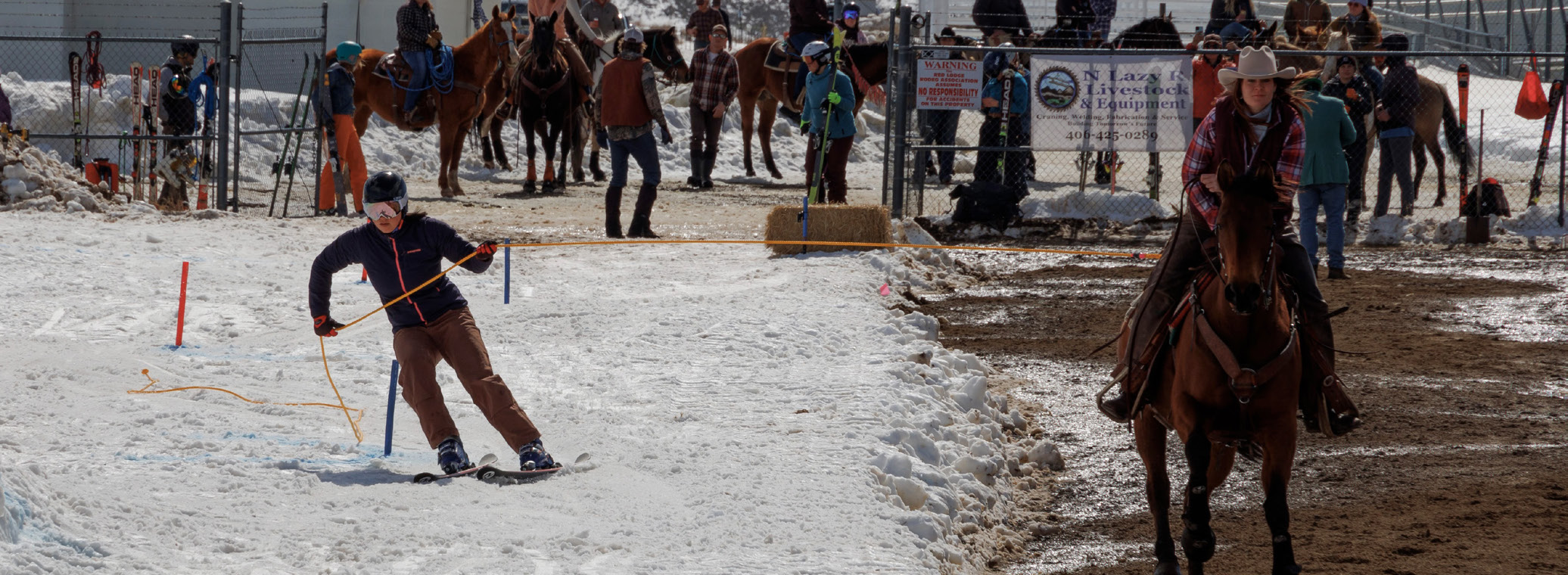
Photo: Jeremy Battles
Electronic timing is utilized, and a backup hand timer. Penalties of about two seconds are given to teams that miss a gate, a horse hitting a skier gate or a horse breaking the jump plane. Those two-second penalties can be a gamechanger in this competition with money, awards and bragging rights at stake.
From Scandinavian origins to its modern-day Montana flair, skijoring is more than just a winter sport; it’s a celebration of tradition, teamwork and community. Whether powered by dogs or horses, the thrill of speed across snow brings together athletes, animals and spectators alike. As towns across Montana continue to embrace skijoring, the event remains a powerful reminder of our connection to winter, to one another and to the adventurous spirit that defines life in Big Sky Country. No matter if you’re competing in skijoring, supporting a team, or simply spectating, it’s all about getting outside, staying active and enjoying Montana’s winter.
|
Join in the fun as a spectator or participant by checking out some of the associations and events across Montana (some location events have already passed, but look for them in winter of 2027). Inaugural Gallatin Skijor Invitational 5th Annual Skijoring Event 20th Anniversary of Whitefish Skijoring Big Hole Valley Skijoring Bridger Brewskis and Spurs Skijoring Competition National Finals Skijoring Races Big Sky Skijoring – Best in the West Showdown |
Haley Barker is the MSU Extension Family and Consumer Sciences and 4-H Youth Development Agent in Stillwater County.