

The Strength of Community Stewardship
Early detection and management of common buckthorn
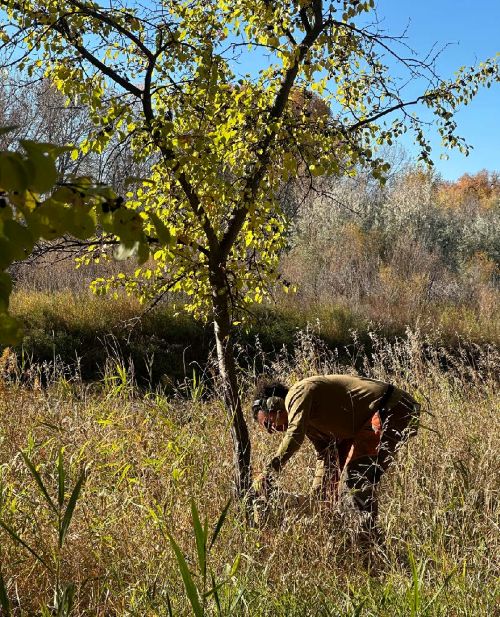
Photo: Megan Hoyer
Did you know a tree was added to the Montana Noxious Weed List not long ago? Common buckthorn (Rhamnus cathartica), a small tree or large shrub, was listed in 2017 as Priority 2A, which designates weeds common in isolated areas of Montana, and requires eradication or containment where the weeds are less abundant. Management is prioritized by local county weed districts. While it might not be as visible as spotted knapweed, leafy spurge, or Canada thistle, common buckthorn is out there, and it can have real negative impacts.
Common buckthorn is an invader that hides in plain sight. It tends to grow among other trees and shrubs and looks similar to certain Montana native shrubs, like chokecherry, and it inhabits the same places. Unlike chokecherry, it does not significantly benefit wildlife or contribute to harmonious plant communities. Common buckthorn was historically used as a hedge species, and if you see it naturalized, you’ll know why. It forms dense thickets that exclude native plant species and are difficult or impossible for humans or wildlife to travel through.
Noxious weed management is most effective and inexpensive when infestations are caught early and when a variety of partners work together. Also, because common buckthorn management is labor-intensive, it takes a multi-year commitment for success. Teaming with community partners helps to make the job easier and hopefully less overwhelming.
How can you become a partner and help manage common buckthorn?
According to Layne Von Lanken, Missoula County Integrated Pest Management Coordinator, “One of the most effective ways to help is to learn how to identify and report it, remove it from your property, and educate other private landowners about its negative environmental impacts. Encouraging others to manage common buckthorn can create a ripple effect, as they share the information with others and awareness spreads.”
Sara Ricklefs, Executive Director of Invasive Species Action Network (ISAN), echoed Von Lanken, perhaps with a bit more gusto, “Report! Tell your friends to report. Call your weed district or MSU Extension office. Yell it from the hilltops.”
EDDMapS and iNaturalist are two apps that can be used on a phone to easily report invasive species. See the included MSU Extension resources for identification tips. ISAN led efforts to create the Woody Invasive Species Statewide Management Plan, including for common buckthorn, which will be a resource available to the public soon.
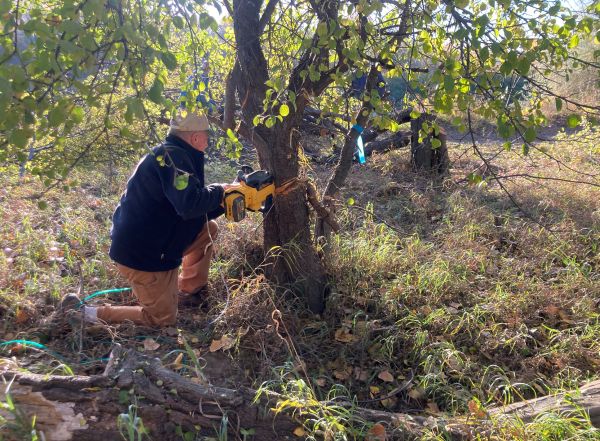
Photo: Megan Hoyer
Anthony Sammartano, Yellowstone County Horticulture Extension Agent, worked with friends and community members to create the Buckthorn Bandits to work on the common buckthorn problem in Yellowstone County. They map and flag common buckthorn, cut and burn it, then revegetate the area with native species, along with any other necessary management activities. These tasks are done with volunteers who team with professionals. In Two Moon Park, they have cleared more than 30 acres of woody invasive species and plan to clear another 20 over the next two years. Sammartano says the most rewarding aspect of common buckthorn management is seeing the landscapes rebound, and other partners agree. “If there is interest in a tour of a project site or a desire to learn more, I am available to help. Feel free to reach out to me via email,” he said.
Megan Hoyer, Invasive Species Education Coordinator for the Montana Department of Agriculture, also encourages email requests for support and guidance, noting success depends on consistent effort and collaboration. Hoyer is part of the Buckthorn Bandits with Sammartano and mentions the building of relationships and friendships through their efforts.
"If we all increased awareness and adopted simple stewardship practices to stop the spread, we would make a difference."
“If we all increased awareness and adopted simple stewardship practices to stop the spread, we would make a difference.” Common buckthorn is present in and around many Montana urban areas, and according to Hoyer, “Programs like Buckthorn Bandits can absolutely be replicated in other communities such as Bozeman, Kalispell, or anywhere in Montana. I encourage people to consider forming a group. I am happy to share lessons learned from Yellowstone County removal projects, including what has worked well and challenges we’ve encountered. I’m also available to brainstorm ideas and discuss integrated weed management and community engagement strategies.”
Common buckthorn, relatively new to Montana, is underrecognized, something invasive species experts are working to change by finding it and fighting it together for success. As Ricklefs said, “I love when others get excited about common buckthorn work, reporting it or taking management action.”
Von Lanken, who archery hunts in river bottom areas directly threatened by common buckthorn, provides a final piece of advice, “If you care about protecting native species, river corridors, and surrounding floodplains, the best approach is to practice Early Detection and Rapid Response (EDRR) to manage the common buckthorn species before it becomes a far more costly and widespread problem in the future.”
Additional ResourcesMSU Extension Weed Fact Sheet – Common Buckthorn:extension-store.montana.edu/products/weed-fact-sheets-common-buckthorn Noxious or Native? Common buckthorn and Chokecherry:youtube.com/watch?v=GCkg8Vpz3Z4 iNaturalist app:inaturalist.org EDDMapS app:eddmaps.org |
Josh Wagoner is the Early Detection, Rapid Response Coordinator at the Montana Department
of Agriculture.