

Simple Ways for Families to Move, Learn and Connect
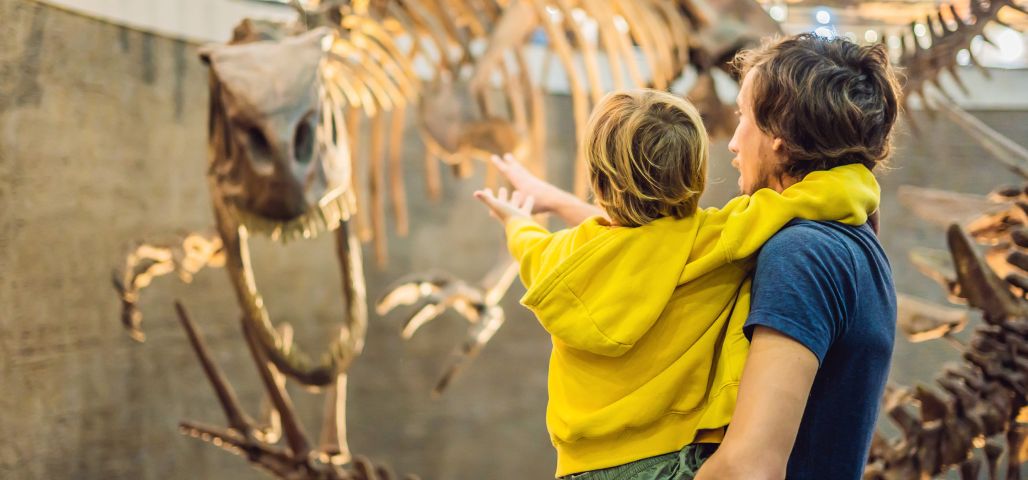
Photo: Adobe Stock
Finding time for physical activity as a family can feel challenging, especially with busy schedules and competing demands. Fortunately, physical activity does not need to look like organized sports or structured workouts to be beneficial. Research consistently shows that children are more likely to enjoy and continue being physically active when movement is shared with parents or caregivers and integrated into everyday experiences.
Community spaces such as museums, parks, and natural areas offer opportunities for families to move together while also supporting learning, creativity, and connection to place. These activities are low-cost, adaptable for a range of ages, and easy to try today.
Why Family-Based Physical Activity Matters
Family-based physical activity supports physical health while also strengthening social and emotional development. Studies show that children whose parents model and participate in physical activity are more likely to be active themselves. Shared activities such as walking, exploring, and playing encourage conversation, cooperation, and enjoyment, helping children develop a positive relationship with movement that can last a lifetime. Moderate movements such as walking or exploring are enough to provide meaningful benefits. The focus does not need to be on intensity or performance, but rather on consistency, enjoyment, and connection.
Go on a museum scavenger hunt
A museum scavenger hunt is an engaging way for families to combine movement, curiosity, and learning in an indoor setting. Children are encouraged to walk through exhibits while searching for specific items, such as a dinosaur fossil or a historical artifact. This active exploration keeps children engaged while supporting observation, literacy, and critical thinking skills.
For example, the Museum of the Rockies in Bozeman offers a ready-made scavenger hunt that families can use during their visit. Copies are available upon request at the ticket counter, making this an easy option that requires little preparation. Families can move at their own pace, stop to read exhibit signs, and discuss discoveries together.
Try it today: Contact a museum you want to visit and ask if they have a scavenger hunt. If not, you can make up your own as you go through the museum. You can also have children create a scavenger hunt for friends or family members. Encourage children to read clues aloud or explain what they found in their own words.
Take a literacy walk at a park
A literacy walk combines reading and physical activity by placing books or reading opportunities along a walking path. Families can walk together while stopping at designated locations to read a children’s book. Parents may read aloud to their children, children may practice reading to adults, or families can take turns reading pages together.
This approach supports early literacy and language development while encouraging gentle physical movement in an outdoor environment. Walking between reading stops helps children associate learning with enjoyment and exploration, reinforcing that reading does not need to be a sedentary activity.
There are established literacy walks in several communities around Montana, including the Story Trail in Billings, the Bozeman Pond Park, and Story Walks in Great Falls, Livingston, Conrad, and Lewistown. In these places, books are selected by the local library, and the pages are displayed throughout the designated path.
Try it today: If your community doesn’t have an established literacy walk, choose a short loop
at a park or nature trail and bring a children’s book that features something you’ll
see on a walk: trees, snow, birds, fish,
berries, water, etc. Focus on shared reading and conversation rather than finishing
quickly. Pausing to talk about pictures or ideas supports reading comprehension and
engagement.
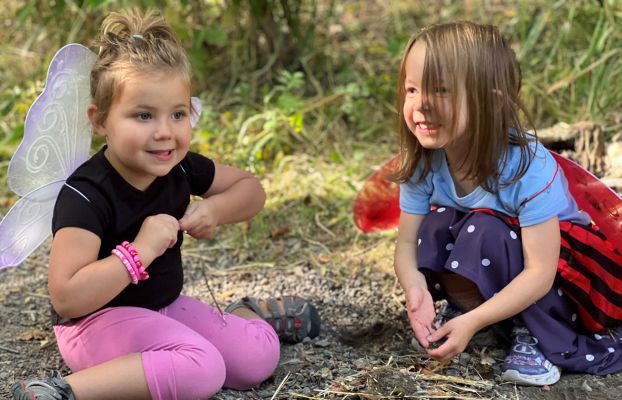
Photo: Kelley Rischke
Build a fairy village outdoors
Fairy villages are popping up around Montana parks and trails. These are often free community events that feature tiny, handcrafted fairy homes and shops created by local artists. Families are invited to explore a path or trail with the imaginative structures. Bozeman’s Bumblewood Thicket, Livingston’s Wishberry Hollow, and the Missoula Fairy Trail at Green Bench Orchard are a few examples.
The fairy village experience encourages walking, curiosity, creativity, and connection to nature for all ages. Families can make their own fairy village experience by creating structures at home or in a natural outdoor space. Using sticks, rocks, leaves, pinecones, and other found materials, children and caregivers can design small fairy homes together. This open-ended activity supports imaginative play, fine-motor skill development, problem-solving, and cooperation. It also provides an opportunity to discuss respectful use of natural spaces and returning materials to their original locations when finished.
Try it today: Encourage children to plan their fairy house before building and work together to solve design challenges using available materials.
Making These Activities Part of Everyday Life
The most effective family physical activities are those that are enjoyable and easy to repeat. Choosing local spaces helps families build routines while fostering appreciation for community and natural resources. These shared experiences do not require special equipment or athletic skills, just time, curiosity, and a willingness to explore together.
By focusing on movement, learning, and connection rather than performance, families can support children’s physical and emotional well-being while enjoying unique community spaces.
Learn More
- Museums, libraries, parks, and nonprofits – explore what’s available in your community
- MSU Extension Family and Human Development:
montana.edu/extension/health/ - SHAPE America – Physical activity guidance for children and families: shapeamerica.org
Karie Orendorff, PhD, is an Associate Professor of Health and Physical Education at Montana State University.