

Cloning at Home: A practical guide to propagating plants from stem cuttings
Have you ever wondered how nurseries and greenhouses turn a handful of stock plants into hundreds of healthy, uniform starts? The secret is plant propagation, specifically asexual and vegetative propagation. While there are many ways to clone plants, stem cuttings remain one of the most reliable and accessible techniques for both home gardeners and commercial growers.
While various propagation methods exist, this article focuses specifically on two major types of stem cuttings: herbaceous and woody.
Before You Begin: Nodes, Internodes, and Why They Matter
Successful propagation begins with understanding plant anatomy. A node is the point
on a stem where leaves, buds, or branches emerge from highly active meristematic cells
that can form new tissues, like roots. The section between nodes is the internode,
which contains fewer
regenerative cells.
When taking stem cuttings, include three to five nodes per cutting whenever possible. Most roots develop from nodes, and multiple nodes increase the chances of successful rooting while providing enough stored carbohydrates to fuel growth. Ensure the cutting is planted in the same direction it grew on the parent plant – always keep the buds pointing upward and avoid burying the tip.
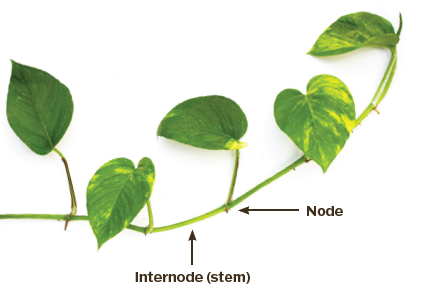
Photo: Adobe Stock
Propagating Herbaceous Plants
Herbaceous plants are non-woody species like houseplants and culinary herbs. They tend to root quickly and reliably in either water or a soilless medium (potting mix).
Choosing and preparing cuttings
- Select a healthy plant that is actively growing but not flowering or fruiting, as reproductive processes redirect energy away from root development.
- Identify a shoot with three to five nodes.
- Using clean, sharp pruners, cut just below the lowest node.
- Remove lower leaves so they do not rot in the water or potting mix.
Herbaceous rooting methods
Water rooting
- Place cuttings in a jar of room temperature tap water, ensuring at least one node is submerged.
- Keep in bright, indirect light. An opaque jar or vase can help the roots stay dark while the light helps the leaves produce energy for root development.
- Change the water weekly and do not add fertilizer; stored carbohydrates are sufficient for root development.
- Transplant into moist media once roots reach 1-2 inches long to
reduce transplant shock.
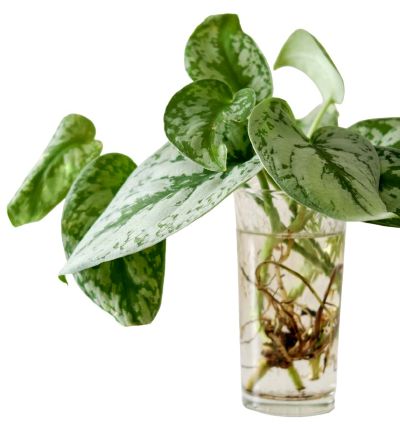
Photo: Adobe Stock
Soilless media
Use sterile, well-drained media such as peat moss, coconut coir, or seed-starting mix.
Some herbaceous plants benefit from rooting hormone. While many houseplants root without it, some species respond well to an auxin-based rooting powder (commonly 0.1-0.3% Indole-3-Butyric Acid, or IBA).
- Dip the basal end (the bottom) of the cutting into rooting hormone if needed.
- Insert cuttings into the media, ensuring at least one node (preferably two) is buried.
- Create a mini-greenhouse by tenting a plastic bag over the pot using stakes. Avoid leaf contact with plastic to prevent rotting.
- Place in bright, indirect light.
Roots typically develop within two to four weeks, depending on the species. Transplant once rooted.
Great candidates for herbaceous cuttings include older or heirloom varieties of pothos, philodendron, monstera, coleus, basil, mint, citronella or scented geranium.
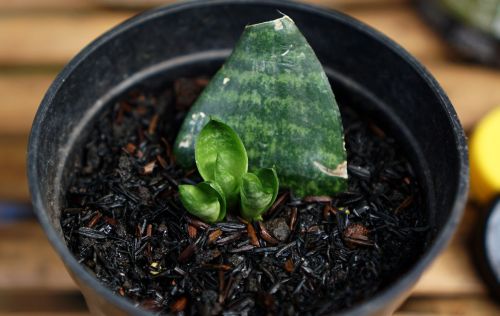
Photo: Adobe Stock
Propagating Woody Plants
Softwood cuttings (post-budbreak)
These cuttings are taken from new growth in late spring through mid-summer, after budbreak but before tissues fully mature. The wood should be flexible but snap when bent quickly.
- Take 4-6 inch cuttings with at least three nodes.
- Remove lower leaves, dip the basal end into water, then roll it into rooting hormone on a paper towel (0.1-0.3% IBA), and tap off the excess.
- Insert into moist soilless media.
- Maintain high humidity using a plastic cover or misting system, avoiding contact with foliage.
- Place in bright, indirect light.
Softwood cuttings usually root in 6-8 weeks, and you should gradually harden off plants before transplanting.
Plants that root well from softwood cuttings include roses, hydrangea, lavender, rosemary, spirea, salvia, elderberry, and some deciduous shrubs. Be sure a specific variety is not patented, which prohibits propagation.
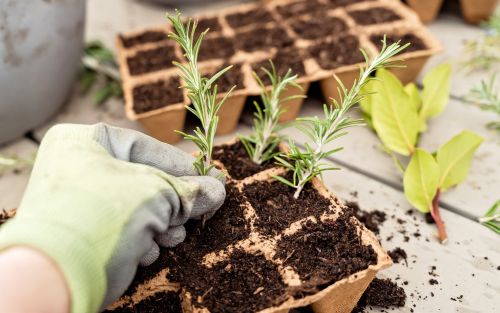
Photo: Adobe Stock
Dormant hardwood cuttings
Dormant hardwood cuttings are taken in late winter or very early spring before budbreak. This method is ideal for many shrubs and fruit trees.
- Select one-year-old wood from the previous
growing season. - Take 6-10 inch cuttings, carefully maintaining orientation.
- If cuttings are collected early, wrap them in a damp paper towel, seal them in a plastic bag, and refrigerate them at a temperature just above freezing until use.
Rooting dormant wood
- Dip the basal end into water, then roll it into rooting hormone on a paper towel (0.1-0.3% IBA), and tap off the excess.
- Insert cuttings into soilless media with two nodes buried and at least one above the surface.
- Keep media moist and place in a cool, bright location.
- No humidity cover is needed, as the tissue is dormant.
Roots typically form in 6-8 weeks as temperatures warm and buds break.
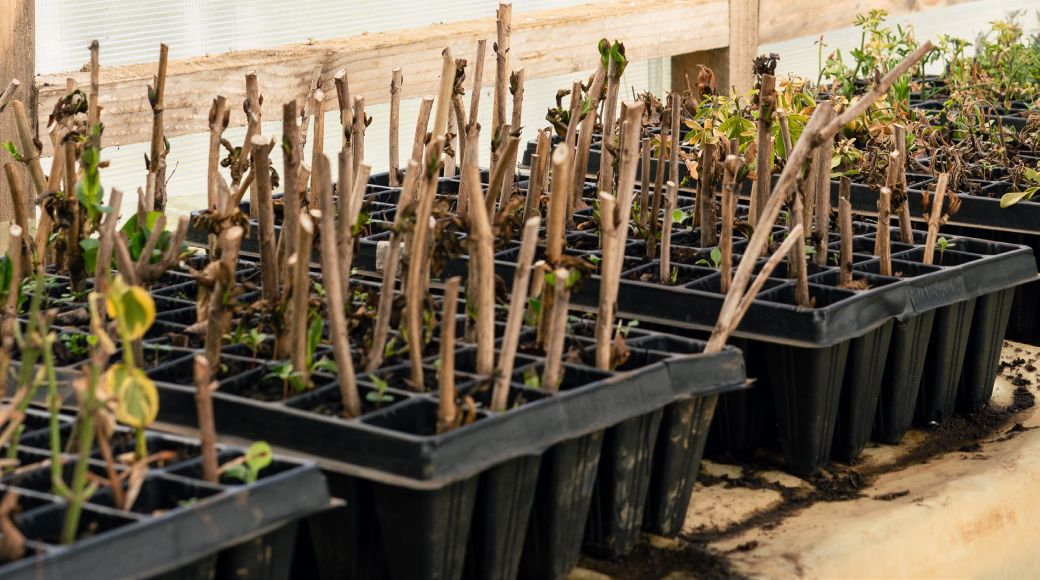
Photo: Adobe Stock
Transplanting Rooted Cuttings and Hardening Off
Check for roots gently to avoid damaging the delicate root system. Before moving plants outdoors, harden off rooted cuttings over 7-10 days by gradually exposing them to lower humidity, temperature fluctuations, and increased light.
Transplant outdoors only after the danger of frost has passed and before peak summer heat. Fall transplanting should allow 6-8 weeks before the first frost so plants can establish before dormancy.
There are many ways to propagate plants, but these techniques provide a strong foundation to start.
While propagating from stem cuttings is rewarding, economical, and can be addictive, it’s important to consider a few restrictions on plant propagation. These include illegal propagation of invasive species, patented or protected plants (often new varieties and hybrids), and prohibited collection and propagation of endangered plants and species of concern.
Additional ResourcesIowa State University Extension – How to Propagate Houseplants by Stem Tip Cuttings:yardandgarden.extension.iastate.edu/how-to/how-propagate-houseplants-stem-tip-cuttings PennState Extension – Propagating Houseplants:https://extension.psu.edu/propagating-houseplants Washington State University Extension – Propagating Shrubs, Vines, and Trees from Stem Cuttings:pubs.extension.wsu.edu/product/propagating-deciduous-and-evergreen-shrubs-trees-vines-with-stem-cuttings/ University of Missouri Extension – Home Propagation of Garden and Landscape Plants: extension.missouri.edu/publications/g6970 |
Mackenzie Dey is the MSU Extension Agriculture and Natural Resource Agent in Flathead
County.