
Featured Montanan: Shared Land Use for Community Health, Working Lands and Recreation in Highland Glen
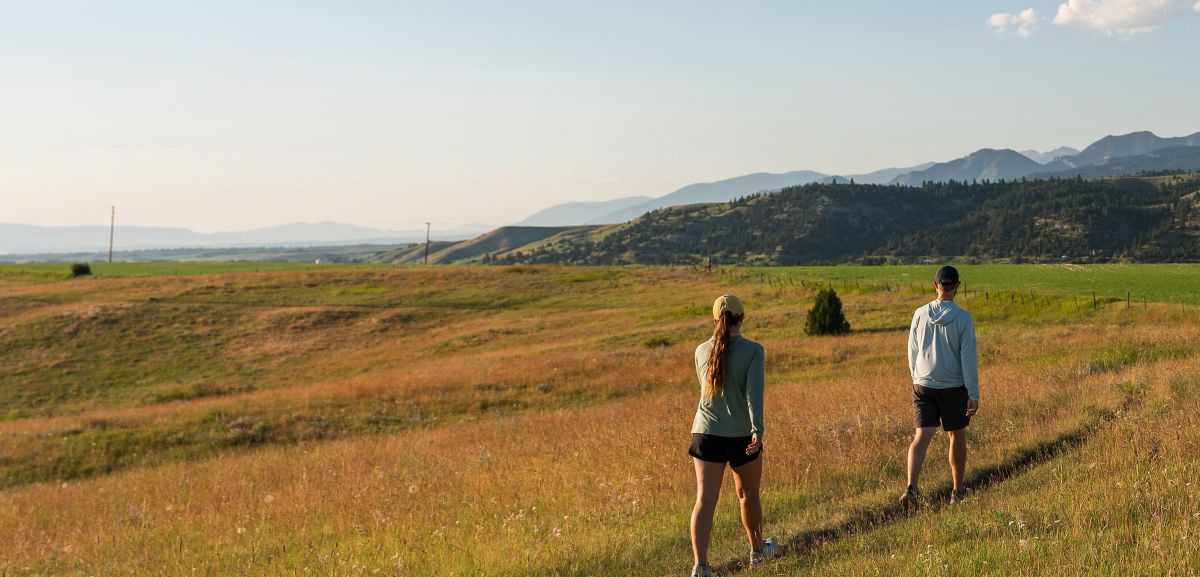
Photo: Zach Altman
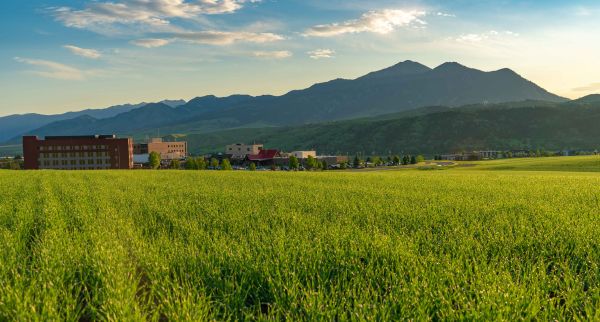
Montana has a rich agricultural history and is also renowned for its diverse recreational opportunities. When these different land uses come together, it commonly brings challenges. But tucked away near the eastern edge of the Gallatin Valley is a 450-acre parcel of privately-owned land where winter Nordic skiing, summer hiking and biking, farming, and cattle grazing all coexist, nestled between residential and commercial neighborhoods.
The Highland Glen (the Glen) property, owned by Bozeman Health within the city limits of Bozeman, is an inspiring example of shared land use through diverse partnerships. The property, across Highland Boulevard from the hospital, has been owned by the hospital since 1959 and has been farmed and ranched since that time (and well before). In 2010, the hospital started working with the Bridger Ski Foundation (BSF) to facilitate winter grooming of cross-country ski trails in the Glen. Following that success, the hospital began partnering with the Gallatin Valley Land Trust (GVLT) in 2013 to build hiking and biking trails through the Glen, initiating what is now year-round recreational use of the property. The fact that this property has continued to support both farming and livestock grazing for more than 150 years, even though it now sits in the middle of Bozeman and supports winter and summer recreation, is incredible.
This type of shared land use does not just happen; it takes a lot of effort. What is making this work?
Bozeman Health is a non-profit health organization, which Chief Operating Officer Kallie Kujawa pointed out, requires the hospital to assess and help meet community health needs. In response, Bozeman Health has expanded community health work beyond the compassionate care provided in its brick-and-mortar facilities and has dedicated the Glen as a living, breathing demonstration of its community health mission.
“We are medical specialists and clinicians, not farmers, ranchers, trail builders or groomers; we are honored to join with our expert partners to ensure that even our property actively improves quality of life in our community,” Kujawa said.
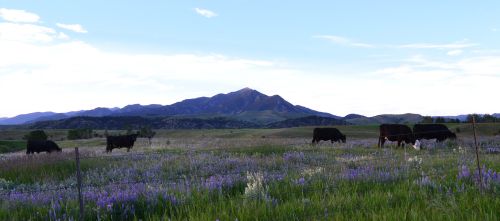
Photo: Gallatin Valley Land Trust
At the center of managing these partnerships is Brianne Rogers. “I can’t see how this would possibly have worked without Brianne’s leadership,” said Jeff Mosley, the MSU Extension Range Management Specialist who has helped guide livestock grazing management in the Glen since 2011. Like many people who grew up in Bozeman, Rogers remembers when so many of the areas now within city limits were farm fields and natural areas. Her family has a ranch, and her affinity for working landscapes made her jump at the chance when, in 2015, Bozeman Health contracted her to coordinate partnerships. Rogers points out what an incredible group of partners she gets to work with on this project and how what is happening here “is so perfectly Montana,” with people coming together to maintain working lands and facilitate healthy lifestyles.
One of those partners, Vaughn Kraft, was in high school in 1961 when his family started farming the land. Kraft recalls that there was a lot of work in those early days to clean up the land and remove run-down fences to make the fields farmable. The Kraft family farmed the land until 2023, when Vaughn coordinated the transfer of the lease to Montana State University. Dave Gettel with MSU farms the Glen now as part of MSU’s Foundation Seed Program. This program grows seed from new crop varieties developed by MSU scientists and distributes the seeds to Montana farmers.
“Being able to farm this land so close to MSU for the Foundation Seed Program is an absolute gift for MSU from Bozeman Health and from Vaughn Kraft.” Dave made it clear that while farming within city limits certainly comes with challenges, the value for MSU and all Montana farmers cannot be overstated.
What is happening here "is so perfectly Montana," with people coming together to maintain working lands and facilitate healthy lifestyles.
On the livestock side, the Kurk family has been running cows in the Glen since 1980 and ranching near Bear Canyon since 1951. Darrell and Sandy Kurk run the operation today, and Darrell noted a few things he thinks make this work for them: “We won’t have a high-headed cow around” (these cows are docile); living just 10 minutes away; and the neighbors and trail users who call on the phone when they see something wrong.
On the winter recreation side, Dan Cantrell notes that BSF has been grooming trails in Bozeman’s Lindley Park across the road from the Glen since the 1960s. BSF grooms more than 50 miles (80 km) of trails in the valley across seven locations, and the combined Glen and Lindley area makes up a quarter of that. BSF asks community members to buy a trail pass, but there is no fee required to use the trails, which cost more than $250,000 a year to provide.
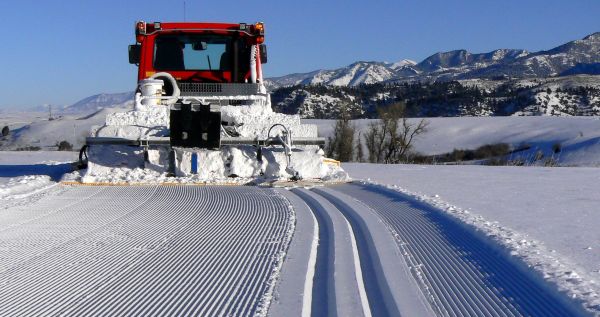
Photo: Bridger Ski Foundation
On the summer recreation side, Matt Parsons pointed out that the Glen is a key link in GVLT’s Main Street to the Mountains trail plan and that there are recreators out there 365 days a year. In the summer, GVLT has staff out weekly to check and adjust gates that are slammed thousands of times. It takes a lot of effort to keep everything working smoothly, and clear communication between partners is critical, which Rogers has helped facilitate. “Brianne is the glue that holds this partnership together,” said Parsons.
Between 2022 and 2024, with engagement from multiple partners and the community, Bozeman Health and the city of Bozeman developed a land-use plan that preserves future recreational opportunities in the Glen. Previously, new roads were planned for construction across the Glen, and the shared land use from these incredible partnerships had de minimis recognition in city planning.
Highland Glen is an incredible multi-use resource for the Bozeman community, made possible by Bozeman Health’s dedication to meeting community health needs, the engagement of multiple partners, and the dedicated leadership of Brianne Rogers.
Adam Sigler, PhD, is the MSU Extension Water Quality Specialist.
|
Photo: Bozeman Health |
|
Highland Glen's Rich HistoryFor thousands of years, indigenous peoples including Shoshone, Bannock, Nez Perce, Salish, and Blackfeet, traversed Highland Glen while traveling east to hunt buffalo. Members of the Crow Tribe regularly camped in the Glen into the 1880s. William Clark and members of the Corps of Discovery were the first European Americans to visit the Glen on July 14, 1806. Later, a buffalo path through the Glen became a wagon road and part of the Bozeman Trail, which brought settlers to the Gallatin Valley and prospectors to Virginia City, MT. Mule deer, white-tailed deer, foxes, beavers, raccoons, coyotes, raptors, songbirds, and waterfowl are commonly observed in the Glen, where wildlife and domestic cattle have coexisted sustainably since the 1870s. Jeff Mosley, PhD, is the MSU Extension Range Management Specialist. |
|
|
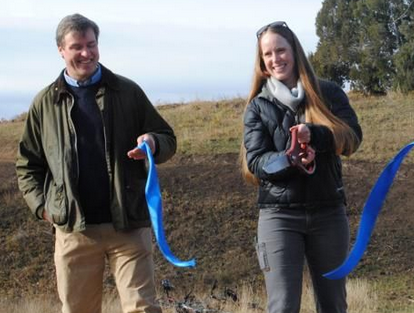
Photo: Helena Dore, Bozeman Chronicle Brianne Rogers cuts the ribbon to celebrate the Wellness Trail’s 2021 opening in Highland Glen. Bozeman Health partnered with GVLT, the City of Bozeman, and the Help Center to create easier access to nature for Gallatin Mental Health Center clients, staff, and neighboring communities. The associated coulee bridge was built to exacting engineering standards; specifically, “Can it handle Kurk’s cows?” Yes. Yes it can. |