


Circular Economy @ MSU
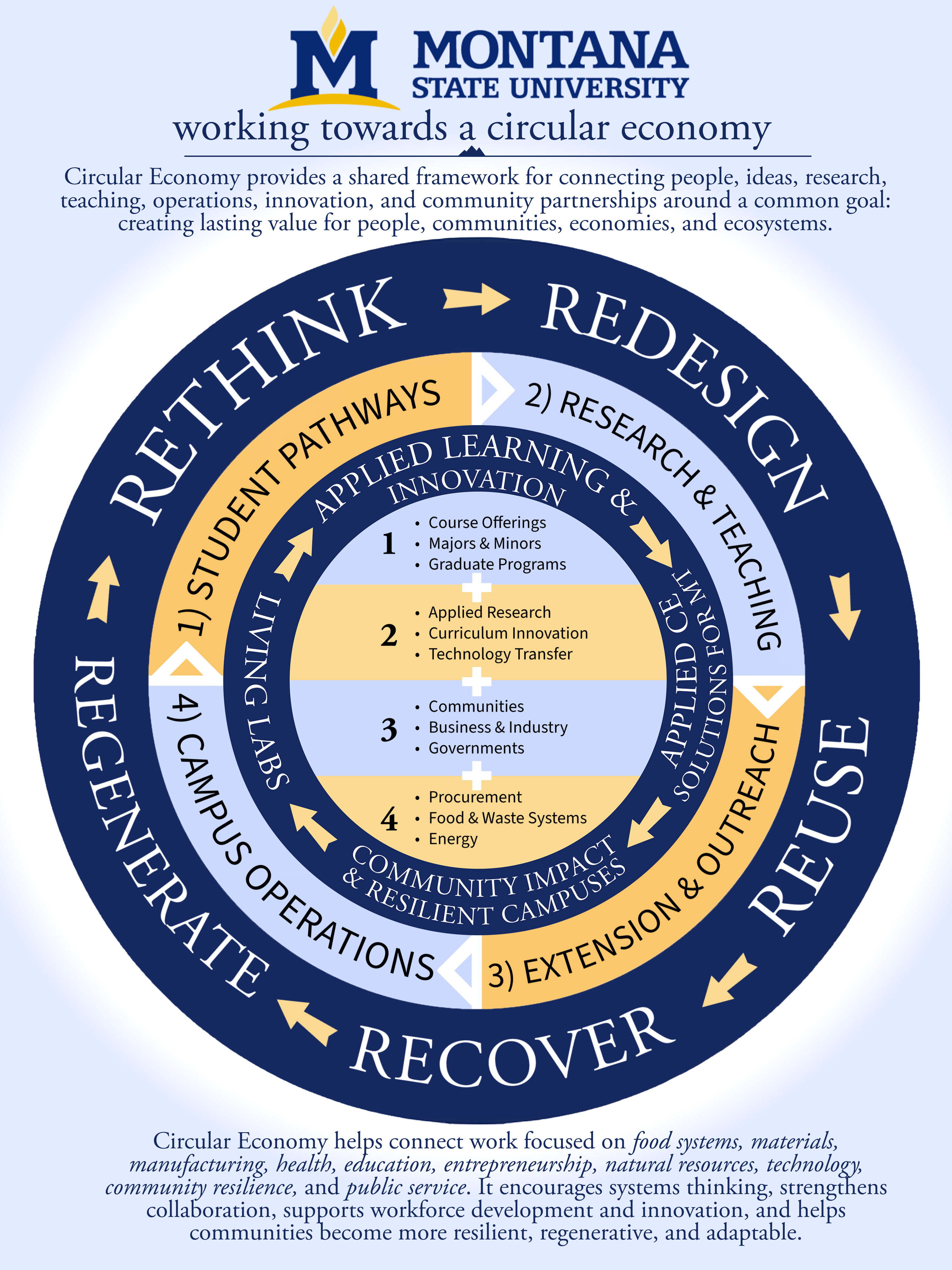
What is the Circular Economy?
Why Circular Economy at MSU?
What is the Circular Economy Collaborative at MSU?
The Circular Economy Collaborative is an emerging interdisciplinary effort that connects faculty, staff, students, researchers, practitioners, and community partners interested in advancing Circular Economy principles through teaching, research, operations, entrepreneurship, workforce development, and community engagement.
We are working to identify existing strengths across campus, build new collaborations, and create opportunities that support Montana's communities, economy, and natural resources.
Circular Economy Collision Event: October 22nd, 11am-1:30pm
The Circular Economy Collision Event will bring together faculty, staff, researchers, and practitioners from across campus to discover shared interests, identify collaborators, and explore future opportunities.
The event will feature:
- Lightning talks
- Facilitated themed discussions
- Collaboration-building activities
- Networking opportunities
Free lunch provided with registration. Location: American Indian Hall
RSVP Here: [RSVP]
Areas of interest:
Circular Economy can be applied across many areas of the university, including:
- Agriculture, Food Systems & Bioeconomy
- Materials, Manufacturing & Waste-to-Value
- Ecosystems, Water & Environmental Stewardship
- Business, Innovation & Entrepreneurship
- Built Environment & Infrastructure
- Campus Operations
- Rural Communities & Health
- Policy, Systems & Society
- Workforce Development & Education
Interested in learning more?
Join the Circular Economy listserv by emailing jenniferg@montana.edu
Share your Circular Economy interest:
Learn more:
- Ellen MacArthur Foundation
- Circular Economy Alliance
- EPA: Circular Economy
- RSVP to Oct. 22 Circular Economy Collision event