

994 Journeys
Research and Economic Development has planned a great line-up of researchers to share their "994 Journeys" in 2026-2027. During these sessions, we ask our speakers to "tell their story" -- which usually includes some fun background, where they trained, how they came to MSU, and a few key highlights on their research and scholarship.
All presenations take place at 4:00pm and will be held in SUB 233
*Nov 2nd presenation will be held in AIH 102*
Monday, September 28, 2026
Monday, September 28, 2026
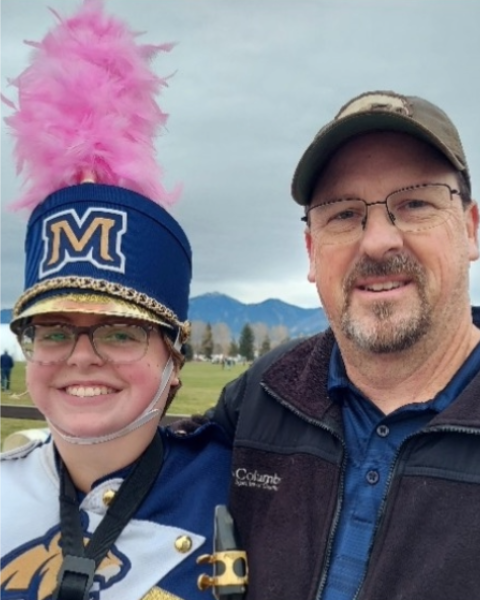
Dave Miller
Dr. Miller attended Texas A&M University and earned a BS, MS and PhD in Aerospace Engineering. Upon completion of his PhD, he started as a Post-Doctoral Researcher at Los Alamos National Laboratory in January 2000. In July 2001 he converted to a Technical Staff Member in MST-16 and remained in that group until he left the laboratory in August 2007. At the time of his departure, he served as the Team Leader of the Mechanical and Dynamic Testing Team. This team operated the quasi-static, kolsky bar and 40mm gas gun in TA-55.
Dr. Miller joined the Mechanical and Industrial Engineering Department at Montana State University in the Fall of 2007 and has since achieved the rank of Professor. He has taught solid mechanics and design courses at all levels, including running the Sr. Capstone Design Course for 8 years. He has also graduated 22 graduate students, most of whom have published their research, with one Best Paper Award at a national composites conference.
Dr. Miller has established a research portfolio in the field of composites characterization for application to the wind and Marine and Hydrokinetic (MHK) energy industries. His work has also included experimental and numerical characterization of complex systems and structures. Recent research is expanding into small form factor machining and inspection systems and the integration of those processes for improved part tolerancing while minimizing machine tool footprint.
Monday, November 2, 2026
Monday, November 2, 2026
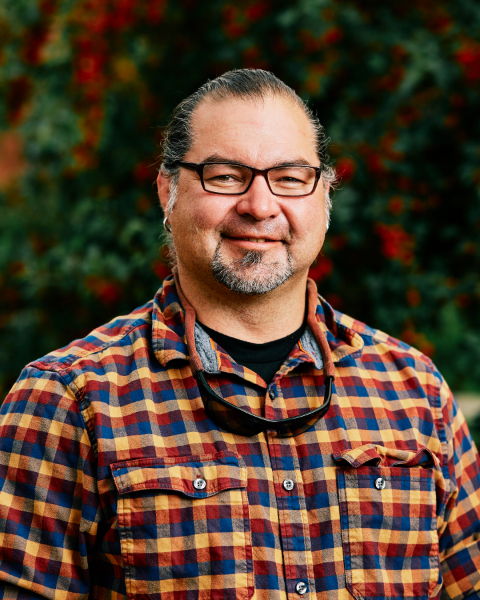
Sweeney Windchief
Please note this talk will be hosted in AIH 102
Sweeney Windchief (Nakóna) is a member of the Fort Peck Tribes in northern Montana and serves as a professor in Adult and Higher Education at MSU. His research interests fall under the umbrella of Indigenous intellectualism, including Indigenous methodologies in research and Indigenous student persistence in higher education. His teaching privileges include law and policy in higher education, Indigenous methodologies in research, and college student development.
As a Co-PI of the Sloan Indigenous Graduate Partnership, his service is toward the overall goal of strengthening and expanding university initiatives to recruit, retain, and graduate students in STEM toward tribal sovereignty and self-determination. He and his wife Sara have two sons who help keep things in perspective.
Monday, January 25, 2027
Monday, January 25, 2027
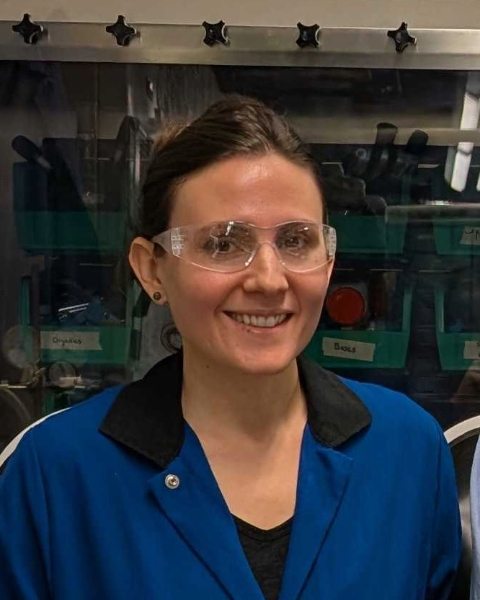
Sharon Neufeldt
Sharon Neufeldt is an Associate Professor of Chemistry at Montana State University. Her research program centers around mechanistic organometallic chemistry with applications towards new catalytic methods, especially for controlling selectivity. Dr. Neufeldt earned a B.S. in Chemistry at Northern Arizona University in Flagstaff and a Ph.D. in Chemistry at the University of Michigan in Ann Arbor. At Michigan, she worked with Melanie Sanford on the development of Pd-catalyzed C—H functionalization reactions. She then became the Cram Teacher-Scholar at UCLA where she undertook postdoctoral research with Ken Houk using DFT to study the mechanism and selectivity of transition metal-catalyzed C—H activation reactions.
She began her independent career at Montana State University in 2016 and was promoted to Associate Professor in 2023. Her recognitions include an NSF CAREER award (2019), a Thieme Chemistry Journals Award (2020), a Cottrell Scholars Award (2020), a Presidential Early Career Award for Scientists and Engineers (PECASE, 2025), and a Fox Faculty Award from MSU (2025).
Monday, February 8, 2027
Monday, February 8, 2027
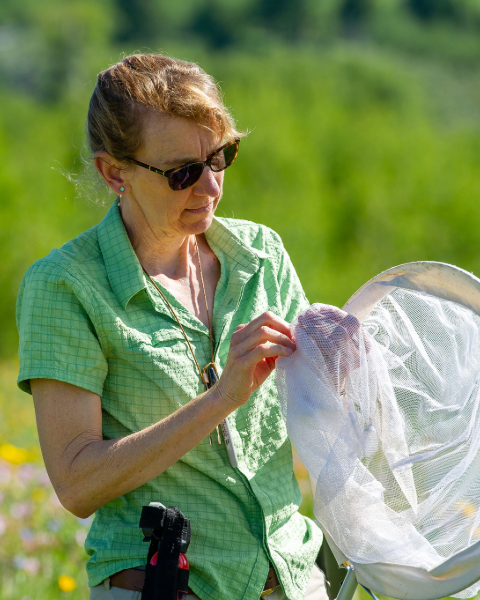
Diane Debinski
Dr. Diane Debinski first arrived at Montana State University as a Ph.D. student in 1987, conducting research on inventory and monitoring of biodiversity in Glacier National Park. She was a postdoctoral scholar at the University of Kansas and then a faculty member at Iowa State University for 23 years. At Iowa State she served as director of an interdisciplinary graduate program and co-PI on an NSF ADVANCE grant.
In 2017, she moved back to MSU, this time as Department Head of Ecology. As department head, she prioritized building collegiality among faculty, staff, and students, enhancing field and experiential course offerings, improving infrastructure in Lewis Hall, and developing research and teaching partnerships.
She has recently returned to the faculty ranks and is ramping up her research, building collaborative international partnerships to synthesize long-term data and answer ecological questions, and diversifying her teaching contributions. Her research focuses on understanding changes in ecological populations and communities in the context of landscape management and environmental variation. In montane meadows she conducts both observational and experimental studies of community responses to drought and aridification. She has a B.S. from University of Maryland, an M.S. from University of Michigan, and a Ph.D. from Montana State University.
Monday, March 29, 2027
Monday, March 29, 2027
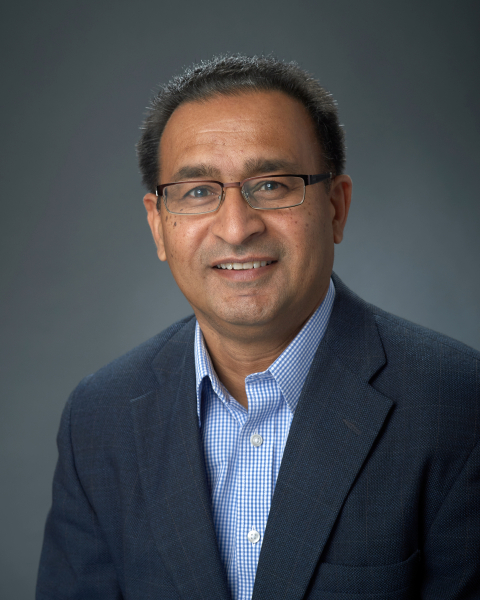
Dilpreet Bajwa
Dr. Dilpreet Bajwa is currently serving as a Professor and Head of the Department of Mechanical and Industrial Engineering at Montana State University, Bozeman, MT, USA. Before joining academia, he worked in the engineered biocomposites industry (International Paper Company, Masonite Corporation, Greenland Composites) for 12 yrs. in various R&D leadership roles. He served as an Adjunct Professor in the Department of Agriculture and Biological Engineering at the University of Arkansas, Fayetteville, AR, and a Professor at North Dakota State University. He graduated from the University of Illinois at Urbana-Champaign in 2000 with a doctorate in Wood Science and Engineering.
Dr. Bajwa’s research area focuses on developing novel, sustainable, multifunctional materials from renewable feedstocks and agricultural byproducts. Currently, his research focuses on the application of nanocellulosic materials to engineer wood properties, synthesizing bio-based thermochemical energy storage materials, developing safe fire-retardant systems for polymer composites, and processing and characterizing biopolymers, carbon fiber, and natural fiber composites.
As a scholar, he has secured more than $51 million in cumulative research funding and partnered with multiple universities, federal labs, industries, and international institutions. He has presented his research at various international conferences and meetings and authored over 160 research papers and technical articles in various journals and books. His research led to 8 invention disclosures and patents. He has supervised 9 postdocs and served as major advisor or co-advisor for 26 graduate students. His research contributions have earned him multiple national and international awards (Fellow of the International Academy of Wood Science, AAIC Outstanding Researcher, A.E. Thompson Career Achievement Award, L.J. Markwardt Wood Engineering Award, etc.) Currently, he serves as Editor-in-Chief of the Industrial
Monday, April 26, 2027
Monday, April 26, 2027
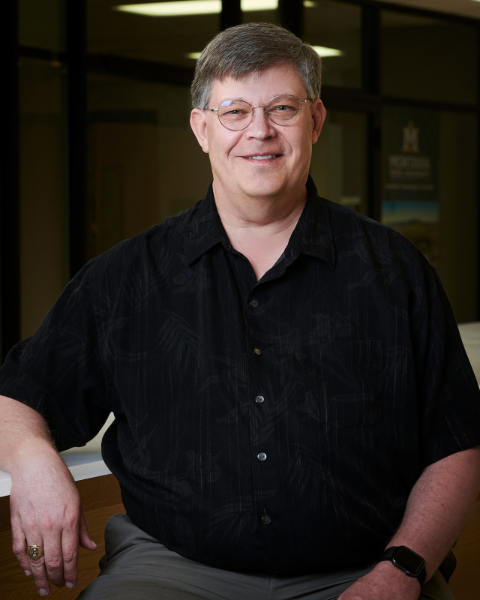
John Sheppard
Dr. John W. Sheppard is a Distinguished Professor in the Gianforte School of Computing. He migrated from the East Coast (Maryland) to Montana in 2008 to become the RightNow Technologies Distinguished Professor after spending 20 years in industry working for Aeronautical Radio in Annapolis, MD. He also served for several years as a Research Professor and eventually Adjunct Professor of Computer Science at Johns Hopkins University, which is where he did his master's and doctoral work.
His research focuses on fundamental and applied methods in artificial intelligence, computational intelligence, and machine learning, and he currently leads the AIML thrust of the NSF EPSCoR SMART FireS project. He is also a founding member of the IEEE Technical Committee on Ethical, Legal, Social, Environmental, and Human Dimensions of AI/CI (SHIELD) and the NATO Information Systems Technology Panel on Explainable AI and Security. In 2007, he was elected as a Fellow of the Institute of Electrical and Electronics Engineers, and effective in 2027, he becomes a Life Fellow of the IEEE.