

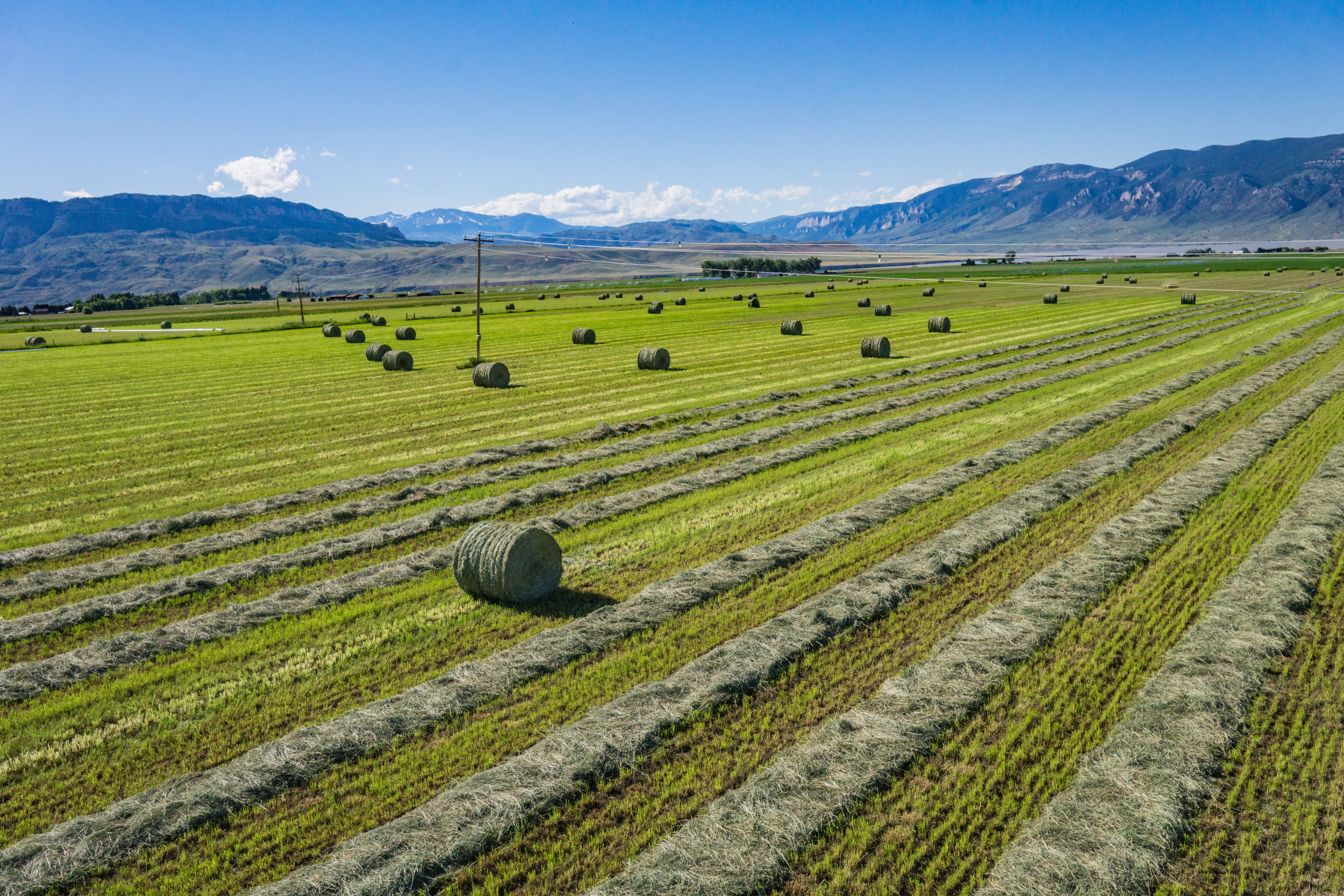
Source: https://stock.adobe.com kenkistler1
Each year, parts of Montana experience drought or drier-than-normal weather conditions.
These conditions not only reduce crop yields but also negatively affect livestock
production by limiting the growth of forage and hay. One strategic option producers
can use to manage production risk and adapt to these challenges is purchasing the
Pasture, Rangeland and Forage - Rainfall Index (PRF-RI) crop insurance plan, which
has been rapidly expanding across the U.S. This article introduces how the PRF-RI
works and highlights recent trends in participation and historical performance in
Montana.
The PRF-RI provides coverage for forage or hay production against lower-than-normal
rainfall. The program is an area-based plan that relies on a grid system, rather than
county boundaries as in other plans. Payouts or indemnities are triggered when precipitation
within the specified grid falls below its normal historical average. The rainfall
index for a grid is computed by a weighted average of data from the four closest National
Oceanic Atmospheric Administration (NOAA) weather stations. Precipitation data directly
experienced by the producer may differ from the weighted average of data and is not
used in calculating this index.
When purchasing the PRF-RI, producers select several factors including intended use,
a coverage level, and index intervals. Producers choose an intended use of their PRF
acreage as either haying or grazing. Coverage levels range from 70% to 90%, with corresponding
premium subsidy rates ranging from 59% to 51%. Producers also choose index intervals,
a minimum of two two-month periods during which they are protected against reduced
rainfall. For instance, a producer can choose intervals of July to August and September
to October. Rainfall in the unselected months is uncovered.
PRF-RI Participation in Montana
Figure 1 illustrates the trends in PRF-RI participation in Montana by coverage level
from 2012 to 2025. Insured acreage remained stagnant through 2021. However, program
participation increased sharply, rising from about 3.0 million acres in 2021 to 13.6
million acres in 2025. Most of this growth occurred in the higher coverage levels,
specifically the 85% and 90% levels. By 2025, 96.2% of insured acres in Montana were
enrolled at the 85% or 90% coverage levels. We observe similar patterns across the
U.S. where insured acres for the 85% and 90% coverage levels accounted for 89.2% in
2025.
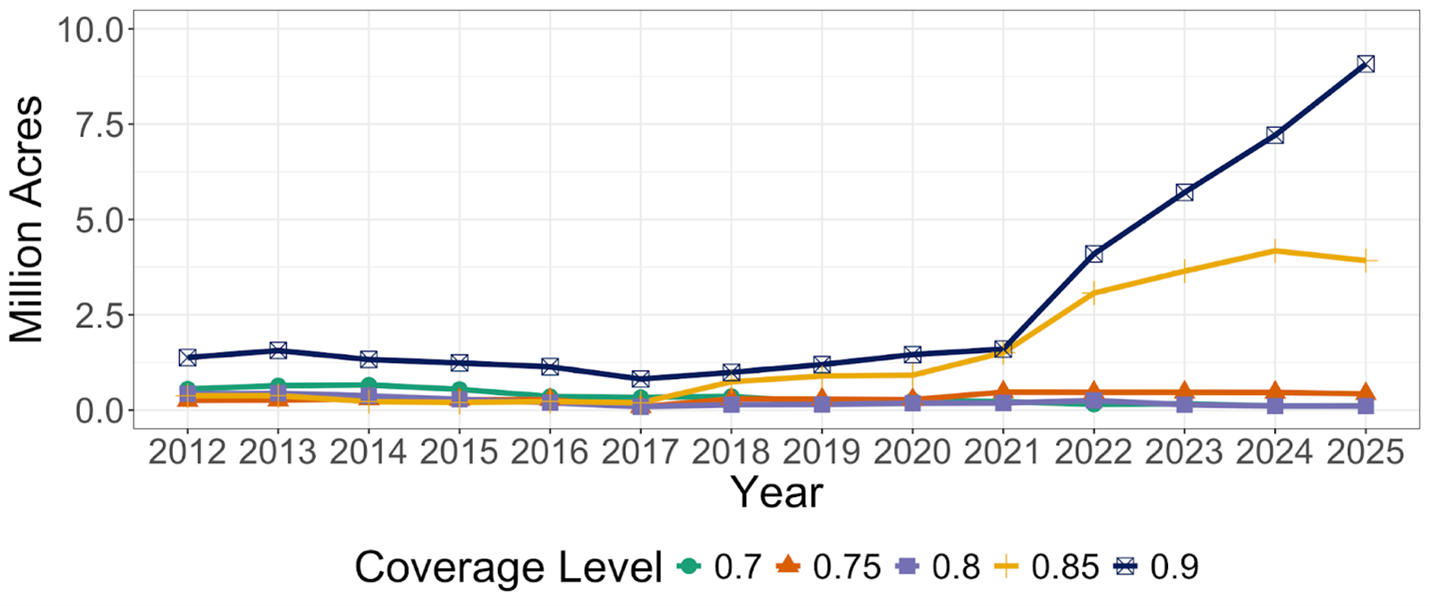
Figure 1. Annual PRF Insured Acres by Coverage Levels in Montana.
To examine the spatial differences in PRF-RI participation across Montana, Figure 2 maps the county-level enrollment, measured by insured acres in 2025. Overall, participation is relatively evenly distributed across the state. Several counties exhibit notably higher enrollment, including Beaverhead (1.40 million acres), and Big Horn (1.37 million acres) in the southern region, along with Valley County (0.92 million acres) in the north.
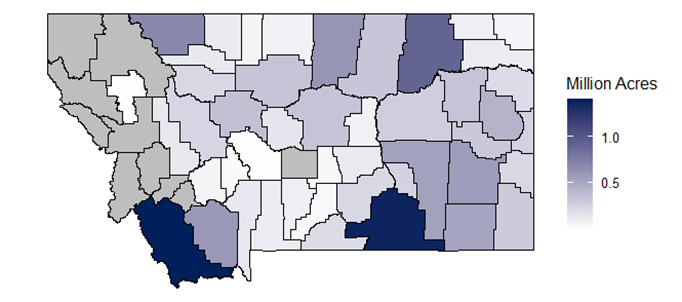
Figure 2: 2025 PRF Participation by County in Montana. Counties with no available data are shown in grey.
Figure 3 displays the distribution of insured acreage across the chosen two-month index intervals in Montana in 2025. Navy bars represent grazing use, and yellow bars represent haying use. For grazing, enrollment is higher for intervals spanning May through August, as well as from November through February. Haying follows a generally similar pattern, though with relatively greater use in the summer months compared to the winter intervals.
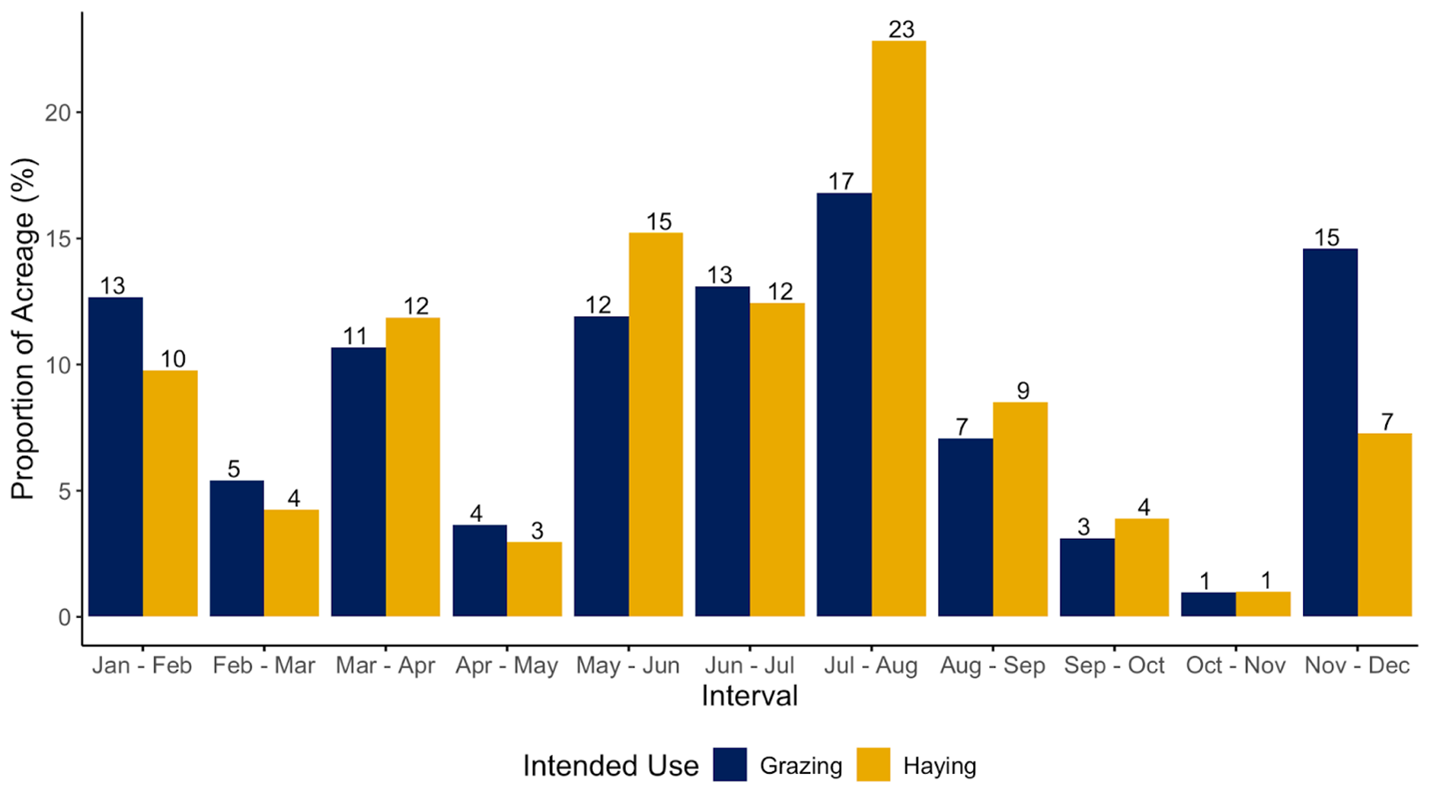
Figure 3. 2025 PRF Participation by Interval in Montana. The proportion is computed by dividing the insured acres for each interval by the total insured acres.
Historical PRF-RI Performance in Montana
To assess the financial returns producers have received from enrolling in the PRF-RI,
we compare the total indemnities received against the total producer-paid premiums
(the total premium minus the total government subsidy). We measure these gains using
the producer-paid loss ratio (PPLR), defined as the ratio of total indemnities to
the total producer-paid premium. If the ratio is greater than 1, it would mean that
producers, on average, received more in indemnities than what they paid in premiums.
If the ratio is less than 1, producers paid more than they received.
Figure 4 shows the PPLR for Montana and the total U.S. between 2012 and 2025. Producers
in Montana received more in indemnities than they paid in premiums in most years,
except for 2013, 2014, and 2019. In recent years from 2020 to 2024, the PPLR were
consistently above 2, indicating that producers received more than twice the amount
they paid in premiums. Overall, Montana producers received $1.79 for every $1 paid
in premiums. The average PPLR in the U.S. was 1.93, with the ratio remaining above
1 in each year between 2012 and 2025. Furthermore, we also see that the U.S. PPLR
show less fluctuation over time when compared to those in Montana.
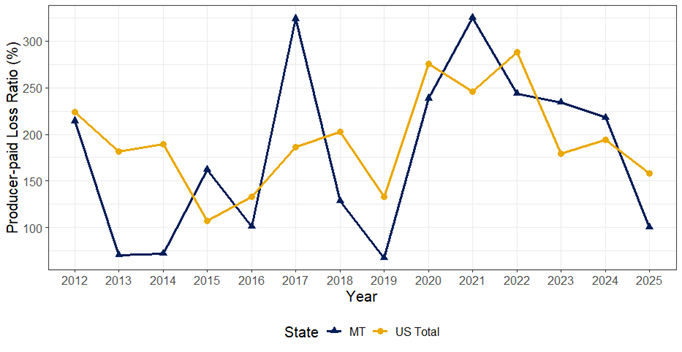
Figure 4. Producer-paid Loss Ratios between 2012 and 2025 in Montana and the U.S.
Concluding Remarks
In this article, we have examined the trends in PRF-RI use in Montana. Prior to 2022,
the PRF - RI use remained relatively flat. However, starting in 2022, enrollment began
to take off, with insured acreage increasing by 4.5 folds through 2025. In most years,
insured producers experienced a positive return, on average, as total indemnities
were greater than their paid premiums.
Will the expansion in Montana continue? Based on the calculation by Tsiboe et al.
(2025), the utilization rate in Montana was around 31% in 2025. This rate is much
lower than in neighboring states like Idaho (100%) and Wyoming (94%) but comparable
to North Dakota (28%) and South Dakota (34%). While the relatively low participation
rate in Montana suggests some potential for further expansion, several factors including
producer knowledge and regional differences in past performance, management strategies,
operation sizes may influence future trends.
References
Tsiboe, Francis, Walker Davis, and Dylan Turner. 2025. “Pasture, Rangeland, and Forage
(PRF) Insurance Expansion and Emerging Limits to Growth.” North Dakota State University
Agricultural Risk Policy Center Briefs.

Sungmin Cheu
Assistant Professor
Montana State University is an ADA/EO/AA/Veteran’s Preference Employer and Provider of Educational and Outreach.